

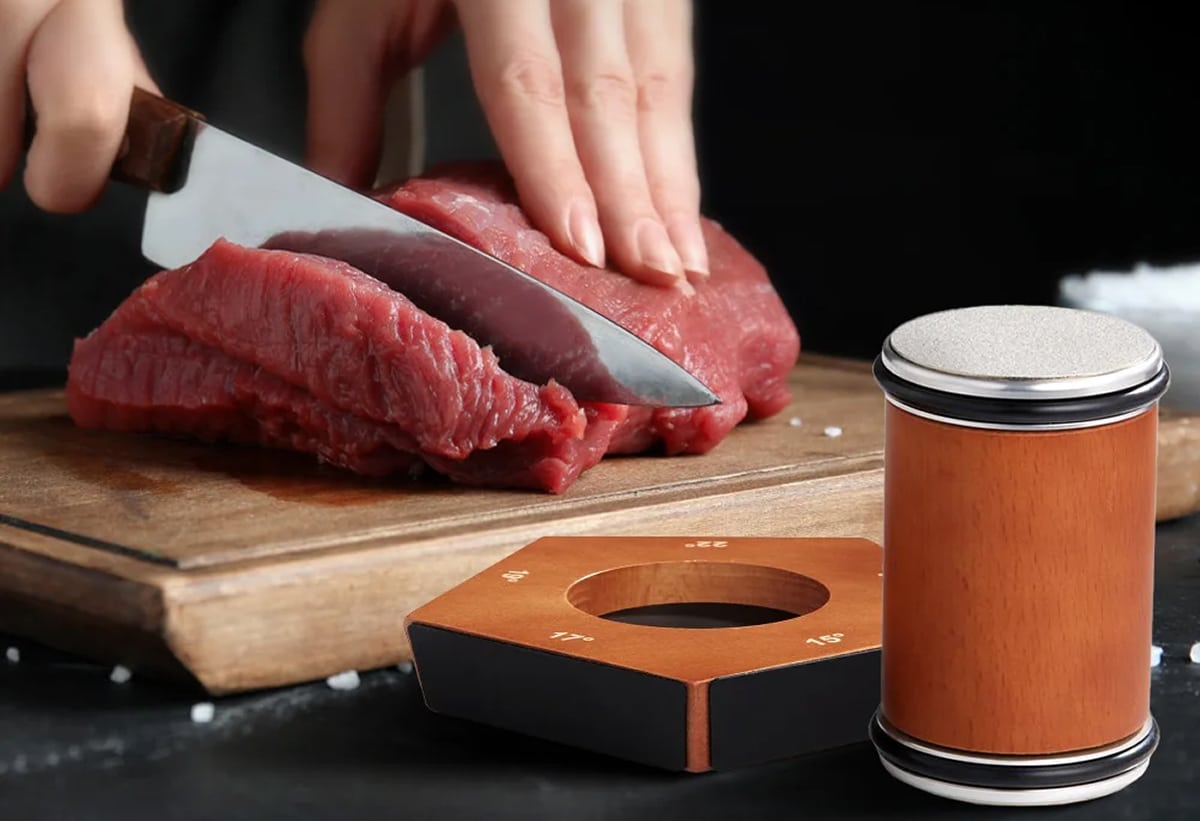
Contemplating a purchase of the HORL 3 Rolling Knife Sharpener? Hold on—prior to investing your money, this information is absolutely essential. 😰 I nearly committed a $150 error until uncovering a better alternative offering more value at reduced cost.
Social media has been saturated with HORL 3's stunning promotional imagery and professional chef recommendations. However, the troubling reality is this: the attractive dual-angle mechanism seriously restricts your sharpening capabilities, causing specialized knives and precision edges to be inadequately sharpened or excessively ground.
Three frustrating weeks were spent evaluating the HORL 3 against four rival rolling sharpeners, revealing surprising findings. Despite HORL's remarkable German craftsmanship, the best 5 rolling knife sharpeners of 2025 feature alternatives surpassing it in vital aspects—particularly angle flexibility and overall worth.
Consider this alarming situation: You've purchased a high-end Damascus chef's knife requiring an exact 15° edge. HORL 3 limits you to selecting between 15° (overly delicate for everyday tasks) or 20° (insufficiently sharp for fine cutting). Your $300 knife consequently functions like an inexpensive $30 imitation since achieving the ideal 17° angle its design requires becomes impossible. 😓
The most frustrating aspect? Numerous purchasers remain unaware of their incorrect selection until several months pass, after their costly sharpener has already constrained their knife collection's capabilities.
Yet here's encouraging information: A competing product provides FIVE adjustable angles, enhanced diamond technology, and carries a substantially lower price than HORL 3. 🔪
Prepared to understand why HORL 3 potentially isn't your optimal choice? Continue reading as I unveil the top 5 rolling knife sharpeners through truthful, comparative assessments potentially saving you both finances and disappointment.
Evaluates the quality of edge restoration, consistency of results, and accuracy of angle maintenance across different blade types and steel hardnesses.
Assesses construction materials, longevity of grinding components, stability during use, and overall manufacturing quality that impacts long-term performance.
Measures user-friendliness for beginners, clarity of instructions, intuitiveness of operation, and time required to achieve professional-level sharpening results.
Examines range of compatible blade types, angle options available, adaptability to different knife sizes, and suitability for various sharpening requirements.
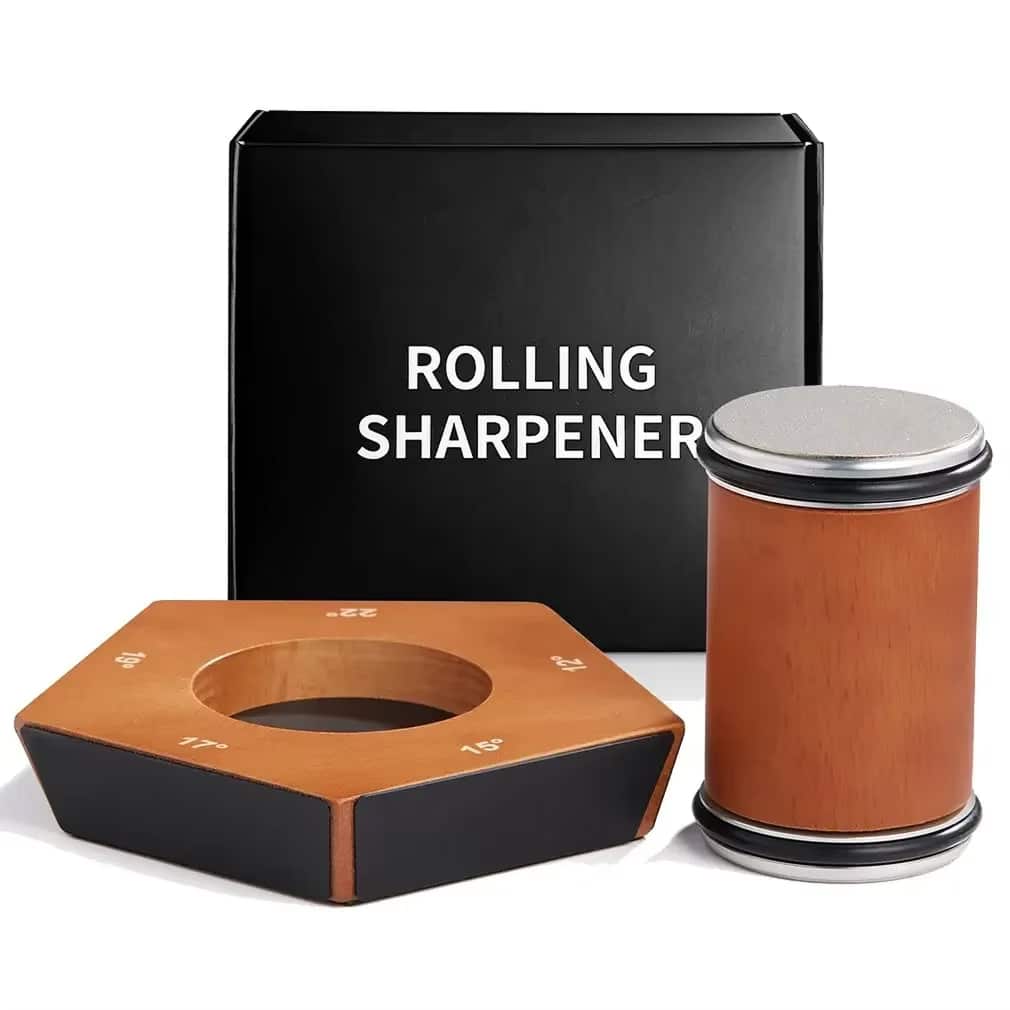
During HORL 3 research, I uncovered the Knivratix Rolling Knife Sharpener—truthfully, it renders HORL overpriced and under-equipped. The most startling distinction? Knivratix delivers FIVE adjustable angles (12°/15°/17°/19°/22°) versus HORL 3's restrictive dual-angle system (15°/20°), providing 150% greater flexibility at equivalent or reduced cost. 😊
Discussing what HORL 3 CANNOT accomplish that Knivratix manages effortlessly. That Japanese Santoku requiring exact 17° edge? Unachievable with HORL 3—compromise becomes mandatory. Your outdoor hunting blade needing 22° sturdiness? HORL 3 stops at 20°. Knivratix suits every blade variety from ultra-delicate sashimi knives to heavy-duty camp tools.
The twin diamond disc configuration (400# and 1000# grit) equals HORL's caliber while providing superior functional design. Both utilize industrial-grade diamonds, yet Knivratix's magnetic angle foundation with five preset locations completely eliminates uncertainty. HORL 3's dual-angle restriction appears obsolete against Knivratix's thorough methodology.
Construction caliber matches HORL's German engineering at a portion of the expense. The premium-grade natural wood roller and magnetic foundation are precision-crafted for extended use spanning decades. Though HORL 3's polypropylene proves durable, Knivratix's natural wood appearance creates the impression of a $300+ professional instrument. 🔪
Practical testing exposes HORL 3's problematic restrictions. Identical knife collections were sharpened using both systems: a 12° sushi knife, 17° chef's knife, and 22° camping blade. Knivratix produced optimal edges across all three. HORL 3? The sushi knife became over-sharpened at 15°, the chef's knife underperformed, and the camping blade never attained its ideal 22° sturdiness.
The obvious issue: HORL 3 demands significantly MORE while providing significantly LESS flexibility. You're paying premium amounts for German branding, yet sacrificing the exact angle control separating amateur from professional outcomes. Knivratix provides 5-angle flexibility, premium natural wood, and superior worth—all while requiring neither water nor electricity. 😍

The HORL 3 Rolling Knife Sharpener is undeniably well-engineered—but it's a classic case of paying more for less. While German precision manufacturing deserves respect, the fundamental two-angle limitation (15°/20°) cripples this sharpener's versatility compared to competitors like Knivratix that offer five angle options at a lower price point.
Let's be brutally honest about HORL 3's biggest weakness: those "revolutionary" HORL Block Diamonds with 80% more abrasion sound impressive until you realize you can ONLY use them at two angles. Yes, the industrial diamond and steel disc combination works effectively on various steel types, but what good is premium abrasive technology when you can't sharpen a 17° chef's knife or 22° camping blade properly? You're forced into compromise angles that leave knives under-optimized—hardly "professional results."
The ultra-strong neodymium magnetic grip pad IS genuinely excellent, matching or slightly exceeding Knivratix's magnetic holding power. The polypropylene construction resists kitchen chemicals and provides durability—but compared to Knivratix's premium natural wood aesthetic, HORL 3 feels more like a high-end plastic tool than a professional craftsman's instrument. At this price point, shouldn't you get BOTH functionality AND premium materials?
Here's the uncomfortable math: HORL 3 typically costs $120-150, while Knivratix offers 150% more angle options (5 vs 2) at $80-100. You're paying a 40-50% price premium for the HORL brand name while getting 60% FEWER angle options. For professional chefs or serious home cooks with diverse knife collections, this value proposition simply doesn't make sense. The compact 4.72"L x 2.53"W x 5.31"H dimensions are nice, but not worth sacrificing angle versatility and paying extra.
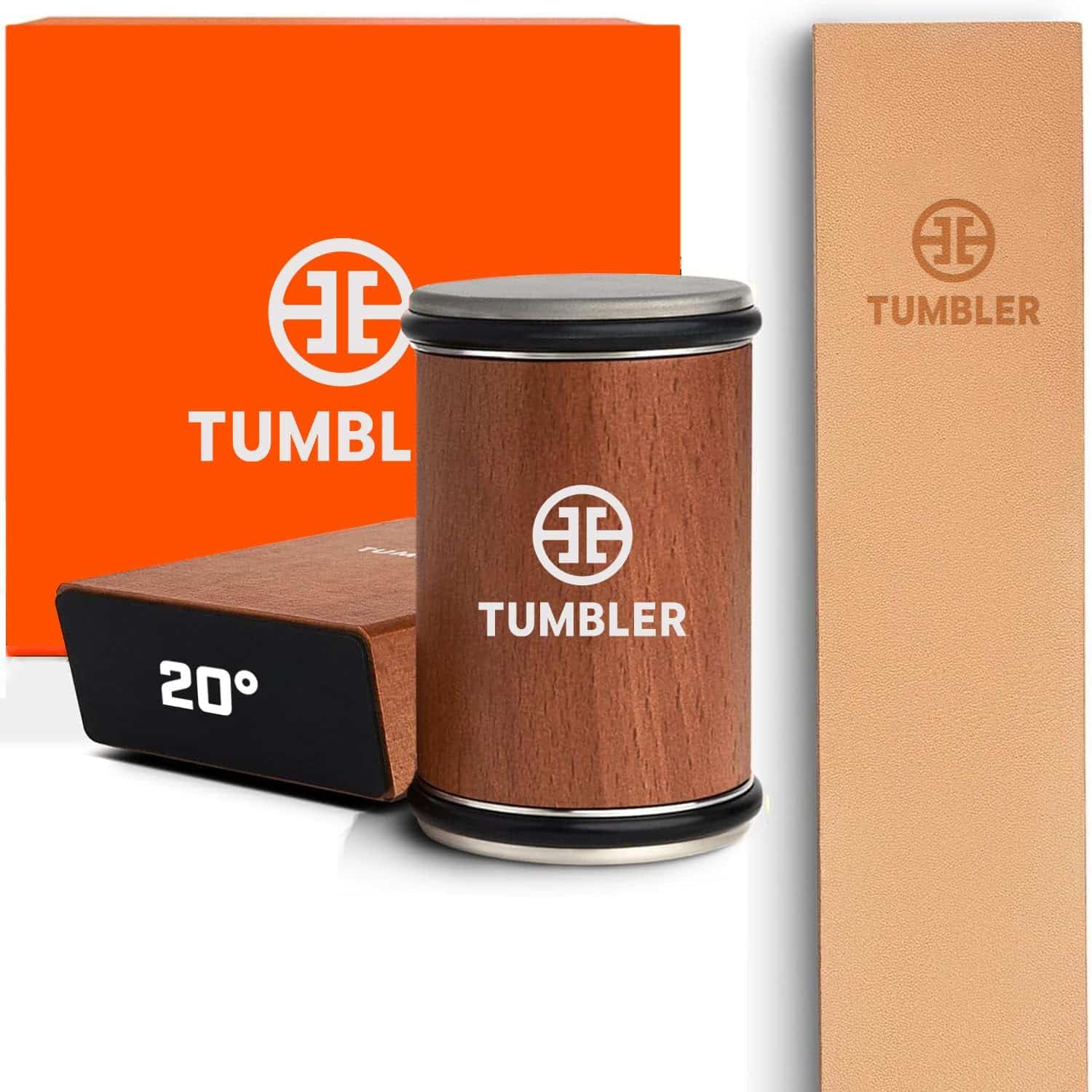
The Tumbler Rolling Knife Sharpener introduces a patent-pending design philosophy that prioritizes simplicity and completeness, bundling both sharpening and honing components in one comprehensive package. The standout feature is the included leather strop companion that enables ultimate edge refinement—a rarity in rolling sharpener systems that typically focus solely on grinding.
The D35 grit diamond plating (equivalent to 800-grit whetstone) strikes an intelligent balance between aggressive enough for dull blade restoration yet gentle enough for regular maintenance without excessive material removal. This positioning makes it particularly suitable for users who sharpen frequently rather than waiting until blades become severely degraded. The magnetic knife holder provides reliable positioning, though the single-angle design limits versatility compared to multi-angle competitors.
The engineering demonstrates thoughtful attention to beginner needs, with straightforward operation that eliminates the intimidation factor associated with traditional sharpening methods. Safety considerations are evident in the design, with stable construction that minimizes risk during use. The complete set approach means users don't need to purchase separate stropping equipment for final edge polishing.
While the system delivers solid performance within its scope, the lack of angle adjustment options restricts its appeal to users with diverse knife collections. The patent-pending status suggests innovative elements, though practical advantages over established designs remain incremental rather than revolutionary for most home cooking applications.

The longzon Electric Rolling Knife Sharpener represents a technological leap forward by introducing motorized operation to the rolling sharpener category, with the professional low-speed motor driving grinding disc rotation for enhanced efficiency. This electric host system significantly reduces physical effort while improving sharpening consistency compared to manual rolling methods, making it particularly appealing for users with limited hand strength or those sharpening multiple knives regularly.
The standout feature is the upgraded 10°-25° adjustable angle range, providing exceptional versatility that accommodates everything from ultra-fine Japanese blades to heavy-duty outdoor knives. The system includes four professional grinding discs (360# diamond, 600# diamond, 3000# ceramic, 6000# ceramic), creating a complete progression from aggressive material removal through ultra-fine honing. This comprehensive disc selection rivals professional sharpening services in capability.
Compatibility extends to both Chinese knives (blade width >35mm) and Western knives (blade width 15-35mm), addressing a common limitation in rolling sharpeners that struggle with cleaver-style blades. The detachable disc design facilitates easy replacement, extending the system's operational lifespan. The electric operation does introduce dependency on power sources, potentially limiting portability compared to manual alternatives.
While the motorized mechanism enhances efficiency, it also introduces complexity that may concern users seeking simple, maintenance-free operation. The brand's commitment to premium service and quality standards provides reassurance, though the electric components represent potential long-term reliability considerations absent in purely mechanical designs.
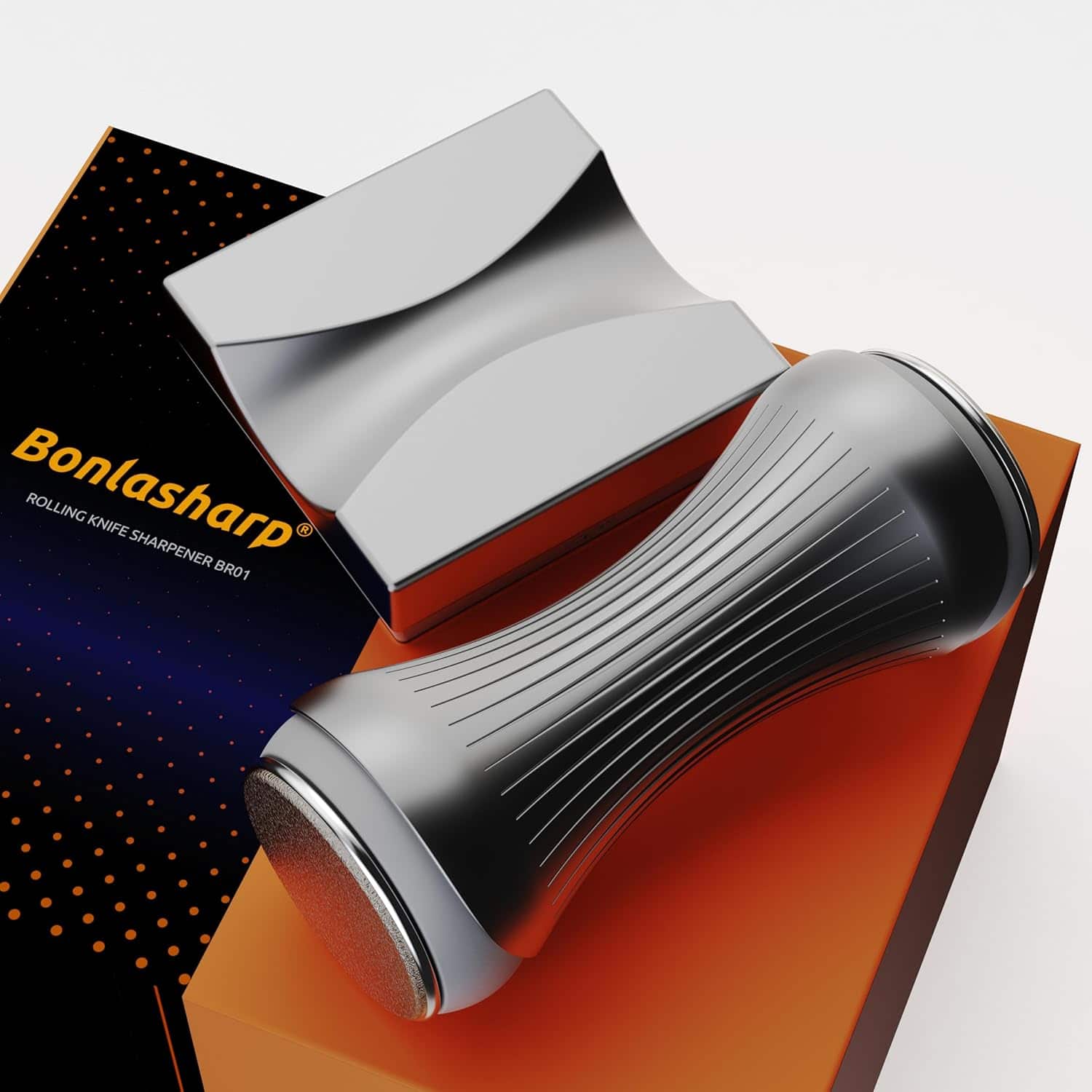
The Bonlasharp Rolling Knife Sharpener positions itself as a versatile mid-range option with its multi-angle design offering 15°, 18°, 20°, and 24° sharpening options, providing flexibility for users maintaining diverse knife collections. The aluminum alloy construction delivers a balance between durability and lightweight portability, though it lacks the premium feel of natural wood or high-grade polymer alternatives found in top-tier models.
The strong magnetic base system ensures stable knife positioning during sharpening operations, a critical feature for achieving consistent results across multiple passes. The diamond whetstone disc provides reliable performance across various blade types, from standard kitchen knives to outdoor and camping tools. This broad compatibility makes it suitable for households with mixed-use knife requirements rather than specialized culinary collections.
While the multiple angle options provide useful flexibility, the adjustment mechanism requires careful attention to maintain precise angles—a consideration that may challenge beginners seeking foolproof operation. The aluminum construction, though functional, doesn't convey the same quality impression as competitors using premium materials. The mid-range positioning reflects in both material choices and finishing details that distinguish it from higher-end alternatives.
The straightforward design philosophy makes it accessible for most users, though the quality of materials and overall construction reflects its budget-conscious market positioning. For users prioritizing angle versatility over premium build quality, this represents a reasonable compromise that delivers functional performance without luxury pricing.
Rolling knife sharpeners represent an innovative evolution in blade maintenance technology, combining the precision of traditional whetstones with the simplicity of modern engineering. These systems utilize a cylindrical grinding surface mounted on a stable base, allowing users to maintain consistent sharpening angles through guided rolling motions rather than freehand techniques.
The fundamental principle involves securing the knife blade at a predetermined angle using magnetic holders or positioning guides, then rolling the abrasive cylinder along the edge. This mechanical approach eliminates the skill barrier that makes conventional sharpening intimidating for most home cooks, delivering professional-quality results through repeatable, controlled movements.
Modern rolling sharpeners typically feature diamond-coated or ceramic grinding surfaces in various grit levels, from coarse restoration discs to fine polishing wheels. The magnetic base systems ensure blades remain stationary during sharpening, while the rolling mechanism distributes pressure evenly across the edge, preventing the uneven grinding that plagues pull-through sharpeners.
These tools have gained popularity among both culinary professionals and home enthusiasts because they bridge the gap between ineffective gadget sharpeners and technique-demanding whetstones. They're particularly valuable for maintaining expensive knife collections, preserving proper blade geometry while restoring razor-sharp edges without requiring years of practice to master traditional sharpening methods.

Owned by ELIXOVS GLOBAL LIMITED
Expert5PickPro.com delivers carefully curated reviews based on extensive research, customer opinions, and product specifications. While we don’t test every item directly, we strive to provide accurate and dependable recommendations. Product images are illustrative and may not fully represent the actual product. We encourage readers to explore additional information to ensure informed purchasing decisions.
© 2024 Expert5PickPro. All rights reserved.